

The BMW F90 M5 and F92/F93 M8 are powered by one of BMW M's most impressive engines: the 4.4-liter twin-turbocharged S63 V8. With immense power, substantial heat output, and a sophisticated cooling system, these cars deliver extraordinary performance — but they also place considerable demands on their cooling components.
One component that often gets overlooked is the factory coolant expansion tank.
BMW uses plastic coolant expansion tanks designed to withstand the temperature and pressure cycles of normal operation. Over time, however, repeated heat exposure, pressure fluctuations, and aging can weaken plastic components, potentially leading to cracks, coolant leaks, and unexpected cooling-system failures.
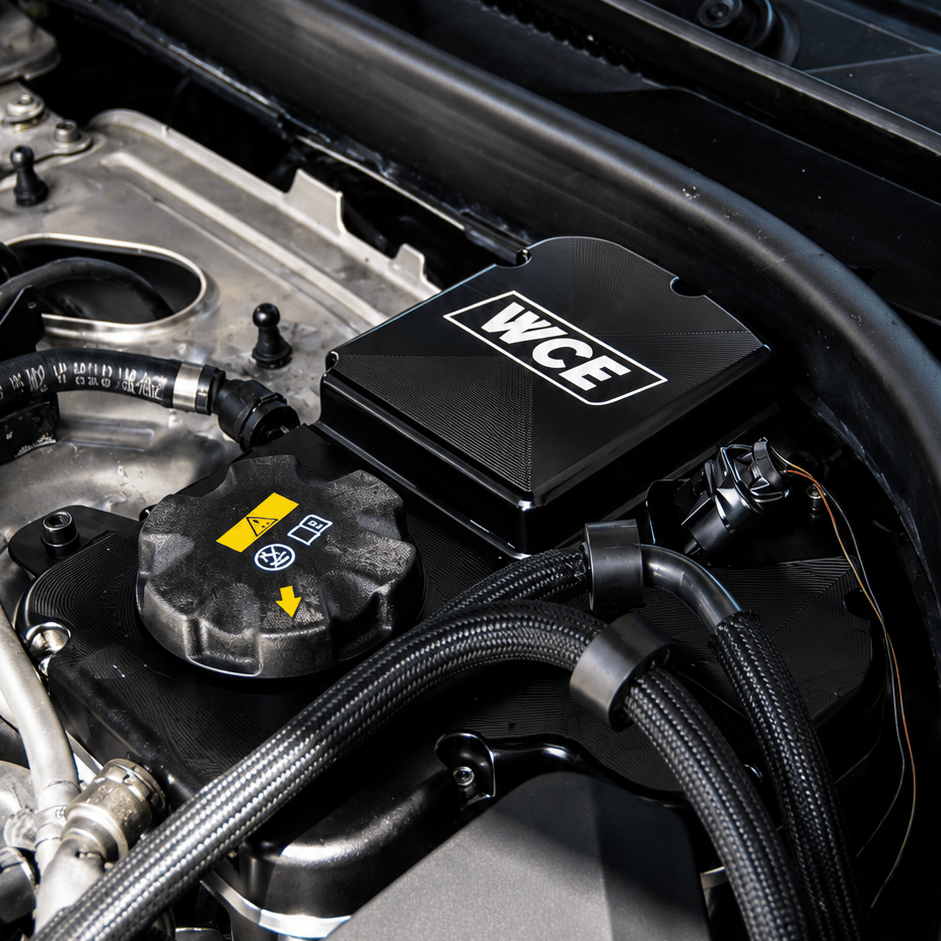
The WCE S63 Billet Coolant Expansion Tanks provide a more durable alternative to the factory plastic components, replacing a potential weak point with precision-machined metal construction.
This guide explains why the factory coolant tanks deserve attention, what happens when they fail, and why upgrading to billet aluminum is a worthwhile investment in the long-term reliability of your S63-powered BMW.
What's at Risk With Factory Plastic Coolant Tanks?
Open the hood of an F90 M5 or F92 M8 and you're looking at an engine compartment designed around a tightly packaged, high-performance twin-turbocharged V8.
The S63 generates considerable heat, particularly during spirited driving, repeated acceleration, and track use. Managing that heat requires multiple cooling circuits and components working together.
The factory coolant expansion tanks are part of that system.
While plastic is lightweight and cost-effective, it has limitations in a high-temperature environment.
Over years of operation, coolant tanks experience:
-
Repeated thermal cycling. Every time the engine heats up and cools down, the tank expands and contracts. These cycles can contribute to material fatigue.
-
Cooling-system pressure. The tank must withstand pressure changes during normal operation, placing continuous demands on its structure and connections.
-
Plastic aging. Prolonged exposure to heat can reduce the toughness of certain plastics, increasing their susceptibility to cracking.
-
Vibration and engine-bay stress. Road vibration and movement place additional stress on mounting points, hose connections, and molded seams.
A factory plastic tank may perform reliably for years. The concern is what happens as the material ages and the likelihood of failure increases.
For an engine as expensive as the S63, a compromised cooling-system component is not something worth ignoring.
What Happens When a Coolant Expansion Tank Fails?
A coolant tank failure can begin with something as minor as a hairline crack or deteriorating connection.
The consequences depend on how quickly the leak develops, which cooling circuit is affected, and whether the driver recognizes the problem.
1. The initial failure. A crack develops in the plastic tank, a seam begins leaking, or a connection loses its seal. Coolant starts escaping from the system.
2. Coolant levels begin dropping. A small leak may only produce occasional coolant warnings or leave dried coolant residue around the tank. A larger failure can cause rapid coolant loss.
3. Cooling-system performance becomes compromised. As coolant escapes, the affected circuit may lose its ability to regulate temperatures effectively. Air can also enter the system and interfere with proper coolant circulation.
4. Temperature warnings and reduced performance. Depending on the affected circuit and severity of the problem, the vehicle may display cooling-system warnings, limit engine output, or require an immediate shutdown.
5. Worst case: serious engine damage. If an engine-cooling failure causes severe overheating and the vehicle continues operating, expensive damage to engine components can occur.
Not every coolant leak results in engine damage, and the S63's separate cooling circuits mean different leaks can produce different symptoms. Nevertheless, a failed coolant tank can quickly turn a routine drive into an expensive repair.
That's the risk the WCE billet coolant tank upgrade is designed to reduce.
Why a Coolant Tank Failure Can Become an Expensive Repair
The price of a replacement factory coolant tank is only one part of the potential expense.
When a coolant tank fails, repair costs may involve much more than replacing the damaged component.
Diagnostic labor. The shop must locate the source of the leak, inspect nearby components, and determine whether other parts of the cooling system have been affected.
Replacement components. Depending on the failure, hoses, seals, fittings, or additional cooling-system components may need replacement.
Coolant service. The affected cooling circuit must be properly refilled and bled using the appropriate coolant and BMW service procedures.
Additional repairs. If the vehicle was operated while overheating, further diagnosis and potentially major engine repairs may be necessary.
Unexpected downtime. Beyond the repair bill, a failed cooling-system component can leave your M5 or M8 out of service when you least expect it.
For owners who regularly drive their cars hard, have upgraded their engine performance, or plan to keep their vehicles long-term, addressing aging cooling components proactively makes financial sense.
Why Billet Aluminum Is a Better Long-Term Solution
The WCE S63 Billet Coolant Expansion Tanks address one of the fundamental limitations of the factory design: its reliance on molded plastic.
Rather than waiting for the original tanks to deteriorate, owners can upgrade to a metal alternative designed for long-term durability.
1. Improved Structural Durability
Billet aluminum provides a rigid metal structure that is less susceptible to the brittle cracking associated with aging plastic.
This makes it particularly attractive for components exposed to repeated temperature changes and cooling-system pressure.
2. Resistance to Repeated Heat Cycles
The S63's engine compartment is an extremely demanding environment.
Unlike plastic, aluminum does not undergo the same heat-related embrittlement process. A properly engineered aluminum expansion tank can therefore provide a more durable long-term solution.
3. Reduced Risk of Plastic Tank Cracking
The primary advantage of the upgrade is eliminating the original plastic tank body as a potential failure point.
Aluminum construction does not eliminate every possible cooling-system leak — hoses, caps, fittings, and seals still require maintenance — but it removes one material-related vulnerability.
4. Premium Engine Bay Appearance
The upgrade also offers a visual benefit.
Billet aluminum components provide a more purposeful, performance-oriented appearance than the factory molded plastic tanks.
For M5 and M8 owners who have already invested in carbon fiber components, upgraded intakes, or other engine-bay modifications, billet coolant tanks complement the overall build.
5. Long-Term Ownership Value
Replacing an aging plastic component with a more durable alternative can help reduce the likelihood of future tank-body failures.
For owners planning to keep their S63-powered BMW for years, this is an upgrade focused on reliability rather than horsepower.
[IMAGE: WCE S63 Billet Coolant Expansion Tanks displayed together, highlighting the machined aluminum construction and finish.]
Caption: WCE billet coolant expansion tanks replace factory plastic components with durable metal construction.
Cheap Insurance: The Cost of Prevention vs. Failure
Think about this upgrade from a financial perspective.
An F90 M5 or F92 M8 represents a substantial investment. The S63 engine, its turbocharging system, and its cooling architecture are expensive to maintain and repair.
Yet some of the components responsible for protecting that investment are made from plastic.
A billet coolant tank upgrade is a predictable, one-time purchase intended to reduce the likelihood of a particular cooling-system failure.
By comparison, an unexpected coolant leak can involve diagnostic charges, replacement parts, labor, coolant service, and vehicle downtime.
In severe cases involving an overheating engine, the financial consequences can be considerably greater.
The WCE billet tanks don't guarantee that a cooling-system failure will never occur. They address a specific risk: deterioration or cracking of the original plastic tank bodies.
For owners who value reliability, that's a compelling reason to upgrade.
Are Billet Coolant Tanks Necessary on a Stock S63?
One of the biggest misconceptions about reliability upgrades is that they're only useful for modified vehicles.
That isn't the case here.
Even a completely stock F90 M5 or F92 M8 subjects its cooling components to repeated temperature and pressure cycles.
Factory horsepower levels don't eliminate the effects of time, mileage, or heat exposure.
In fact, some of the strongest reasons to upgrade have nothing to do with making additional horsepower.
Daily-driven vehicles: Repeated warm-up and cool-down cycles gradually age cooling-system components. A durable replacement can help address this long-term wear concern.
High-mileage vehicles: As the vehicle accumulates mileage and years of service, inspecting and proactively replacing aging plastic cooling components becomes increasingly important.
Tuned and modified vehicles: Higher power output and sustained performance driving can increase thermal demands, making cooling-system condition especially important.
Track-driven vehicles: Repeated high-load operation places significant demands on the cooling system. Reliable components are particularly valuable when the engine is operating under sustained stress.
Low-mileage enthusiast vehicles: Even cars that spend much of their time in a garage experience material aging. Mileage alone does not determine the condition of plastic components.
The common denominator is simple: every S63 relies on a properly functioning cooling system, regardless of whether the car is stock or heavily modified.
Do Billet Aluminum Coolant Tanks Improve Cooling Performance?
Not necessarily — and that's an important distinction.
The primary purpose of a billet coolant expansion tank is durability, not additional cooling capacity.
An aluminum tank does not automatically lower coolant temperatures, increase radiator efficiency, or improve heat exchanger performance.
Those functions depend on the design and operation of the entire cooling system.
What the billet tank does offer is a more robust alternative to the original plastic reservoir.
A properly designed replacement should maintain the necessary coolant capacity, pressure-control provisions, connections, and compatibility with the intended cooling circuit.
The benefit is improved component durability and reduced susceptibility to plastic tank-body deterioration — not an unsupported promise of lower operating temperatures.
Why Choose WCE S63 Billet Coolant Expansion Tanks?
The WCE S63 Billet Coolant Expansion Tanks are intended for owners who want a functional reliability upgrade without compromising the performance-focused character of their BMW.
Key benefits include:
-
Billet aluminum construction: Replaces the original plastic tank body with a more durable metal alternative.
-
Improved long-term material durability: Addresses the risk of age-related plastic cracking and embrittlement.
-
Performance-oriented design: An upgrade suited to the demanding operating environment of the S63 engine.
-
Premium engine-bay aesthetics: Offers a cleaner, more refined appearance than the factory plastic reservoirs.
-
Preventive maintenance value: Allows owners to address a potential failure point before a leak leaves them stranded.
Installation: What Owners Should Know
Replacing a coolant expansion tank involves more than simply removing one reservoir and installing another.
The cooling system must be handled correctly to prevent leaks, trapped air, or improper coolant levels.
A typical installation involves removing the factory tank, transferring or connecting the appropriate components, installing the replacement reservoir, and refilling and bleeding the affected cooling circuit according to BMW's service procedures.
Because the S63 uses multiple cooling circuits, it's important to identify which tank is being replaced and follow the correct procedure for that system.
Owners experienced with BMW cooling-system maintenance may be comfortable performing the installation themselves. Otherwise, an independent BMW performance shop is a sensible choice.
Frequently Asked Questions
Why do the factory coolant tanks on the F90 M5 and F92 M8 fail?
Plastic coolant expansion tanks experience repeated heat cycles, cooling-system pressure, and material aging. Over time, these factors can contribute to cracks, weakened seams, or leaks. Failure is not inevitable, but aging plastic components are a legitimate maintenance concern.
Are billet coolant tanks worth it for an F90 M5?
For owners planning to keep their M5 long-term, a billet coolant tank can be a worthwhile preventive upgrade. It replaces the plastic tank body with a more durable material and reduces exposure to one potential cooling-system failure point.
Will billet coolant tanks lower my coolant temperatures?
Not inherently. The primary benefit is structural durability rather than improved cooling performance. Coolant temperature management still depends on the vehicle's radiators, heat exchangers, pumps, fans, and overall cooling-system condition.
Can a cracked coolant tank damage my S63 engine?
A coolant leak affecting the engine-cooling circuit can cause overheating if it becomes severe enough. Continued operation under those conditions can result in expensive engine damage. Leaks in other cooling circuits may have different consequences, but all coolant leaks should be investigated promptly.
Do I need billet coolant tanks if my M5 or M8 is stock?
A stock vehicle can still benefit from replacing aging plastic components. The upgrade is particularly relevant for owners concerned about long-term reliability, higher mileage, or repeated heat exposure.
Are billet aluminum coolant tanks completely maintenance-free?
No. Although aluminum eliminates the plastic tank body's susceptibility to age-related embrittlement, seals, fittings, caps, and connected hoses still require inspection and maintenance.
Does the WCE billet coolant tank fit my BMW?
The WCE S63 billet coolant tank offering is intended for applicable F90 M5 and F92/F93 M8 configurations. Confirm the exact model year, chassis, and cooling-circuit application before ordering.
The Bottom Line
The S63 is an exceptional engine, but protecting its performance means paying attention to the components that keep it operating safely.
The factory plastic coolant expansion tanks may seem like minor components, yet their condition matters to the reliability of the entire cooling system.
A cracked tank can mean coolant loss, unexpected repairs, and potentially much more serious consequences if an overheating condition is ignored.
The WCE S63 Billet Coolant Expansion Tanks offer a practical preventive upgrade by replacing aging plastic reservoirs with more durable metal construction.
Unlike modifications focused on horsepower, sound, or appearance, this upgrade is about protecting the performance you already have.
Because the best cooling-system failure is the one you never experience.
Upgrade your F90 M5 or F92 M8 with WCE S63 Billet Coolant Expansion Tanks. Explore the product, confirm your vehicle's fitment, and invest in a more durable cooling-system component before the original plastic tank becomes a problem.